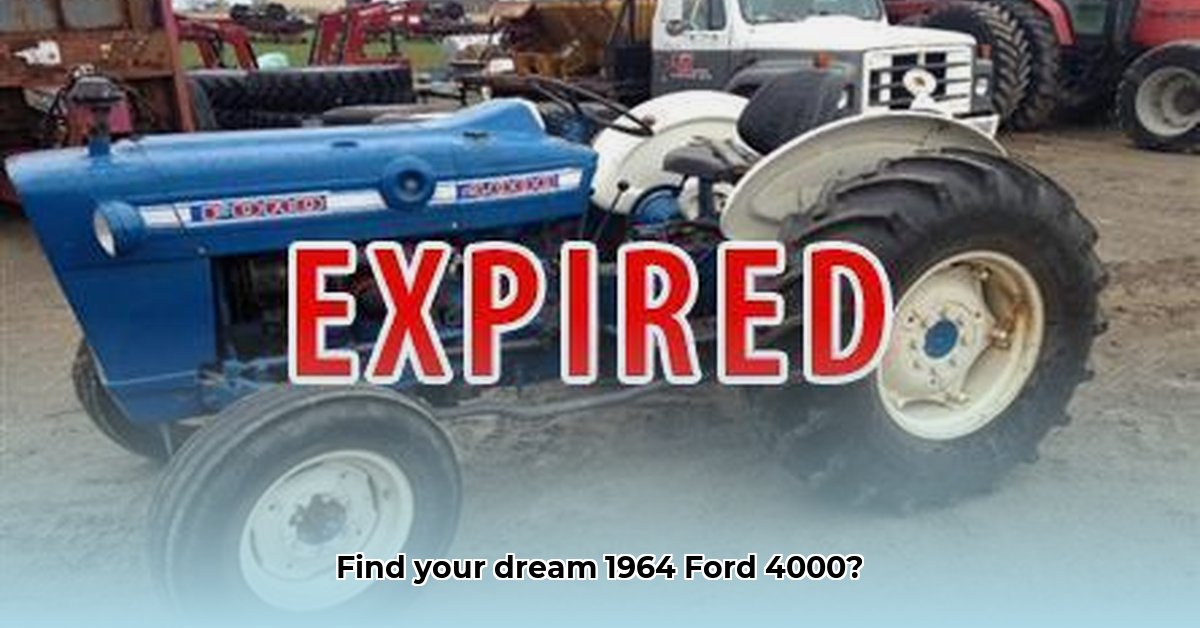
1964 Ford 4000 Tractor for Sale: Your Guide to Finding the Perfect Oldie but Goodie
The rumble of a classic Ford 4000 tractor is music to many ears. But buying one requires careful consideration. This guide navigates the world of used 1964 Ford 4000 tractors, providing actionable advice for finding the perfect machine, whether you're a seasoned collector or a first-time buyer. We’ll cover everything from pre-purchase inspections to restoration and pricing strategies, empowering you to make an informed decision. For more information on the weight of these tractors, check out this helpful resource: Ford 4000 weight.
Understanding the Market for a Classic Ford 4000
The market for classic Ford 4000 tractors is surprisingly robust, with prices varying significantly. Condition is the primary driver; a beautifully restored tractor commands a premium, while a fixer-upper will be considerably cheaper. Location also plays a role, mirroring any other market: high demand and low supply translate to higher prices. Isn't it fascinating how regional variations affect even the price of classic machinery?
What Drives the Price of a Used Ford 4000? A Closer Look
- Condition: Pristine condition significantly increases value.
- Location: High-demand areas often see higher prices.
- Original Parts: The presence of original, well-maintained parts adds substantial value.
What to Look For: Giving Your Potential Purchase a Thorough Checkup
Before purchasing, conducting a thorough inspection is crucial. Think of it as a pre-purchase health check for your potential new workhorse. Here’s what to examine:
Engine Health: Listen for unusual noises (knocking, squealing, rattling) indicating potential problems. Check oil, coolant, and other fluid levels for leaks or low levels.
Transmission Smoothness: Shift through all gears; smooth shifting indicates a well-maintained transmission, while clunky shifting might signal problems.
Hydraulics Test: Test the lift mechanism (used to raise and lower implements). Smooth, strong lifting indicates a healthy hydraulic system, while hesitation or odd noises suggest potential issues.
Body Condition: Inspect for rust (particularly around wheel wells and undercarriage), dents, and signs of damage. This affects both appearance and value.
Tire Tread: Check tire tread depth and look for cracks or bulges. Worn tires will need replacing soon, adding to your overall costs.
Pricing Your Dream Tractor: A Reality Check
Pricing for a 1964 Ford 4000 is highly variable. Online marketplaces and classifieds offer a starting point for comparison, but remember, pictures can be deceiving. A hands-on inspection is vital before committing. Consider the condition, location, and included accessories when assessing price.
Restoration: A Labor of Love (and Maybe a Second Mortgage)
Restoring a classic tractor is deeply rewarding but expensive. Budget carefully, considering parts, labor (if you're not doing it yourself), and unexpected costs. Restoration costs often exceed the initial purchase price. Planning is paramount, ensuring you're prepared financially for this significant investment.
Making the Big Decision: Is This the Right Ford 4000 for You?
Buying a classic tractor is a serious commitment. Are you prepared for the time and financial investment required for upkeep? Will it be a working machine, or a showpiece? Take your time and make an informed decision.
Weighing the Pros and Cons: The Good, the Bad, and the Ugly
Pros:
- Robust, reliable design.
- Relatively simple maintenance and repair (compared to modern tractors).
- Many parts are still available.
- Active enthusiast community offers support and resources.
- Potential for value appreciation.
Cons:
- Age increases the likelihood of mechanical issues.
- Restoration can be costly and time-consuming.
- Fuel efficiency is typically lower than modern tractors.
- Sourcing some parts can be challenging and expensive.
- Lacks the advanced technology of modern machines.
How to Restore a Ford 4000 Tractor and Maximize Its Resale Value: A Step-by-Step Guide
- Detailed Assessment: Create a repair checklist, identifying what needs repair or replacement.
- Parts Procurement: Begin sourcing parts; prioritize original parts where possible, but consider cost-effective alternatives.
- Systematic Restoration: Tackle mechanical issues before cosmetic ones; document each step.
- Professional Assistance: Seek professional help for complex repairs.
- Testing and Refinement: Thoroughly test all systems after major repairs.
- Presentation: Clean and detail the tractor; use high-quality photos for advertising.
Remember, the perfect 1964 Ford 4000 is out there—finding it involves patience, thorough research, and careful consideration. This guide empowers you to make an informed decision, leading you towards a rewarding experience with your classic tractor.